Of course I should also say that while I am completely surprised at the election, I am confident that this was the will of God and that He will use this for the good of my salvation and for His glory.
I didn't mean to make it sound like a negative thing at all!
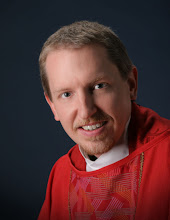
So as Eric Brown first reported, the Oklahoma District Convention went differently than I had planned. I was elected 3rd Vice President of the District for a three-year term. For those who are unfamiliar with our denomination, the Synod is divided into districts, each with an elected District President, a pastor who is the ecclesiastical and administrative supervisor for the region. Districts are composed of circuits, which are groupings of seven or more congregations (think dioceses). the Oklahoma District is also divided into three regions, each composed of three circuits. I am the Vice President of the Western Region, and am charged with representing the District President in this region and generally administrating the area in his absence. All this is pretty broad and vague on purpose; I'll have to read the policy manual and the Synodical handbook to find out exactly what all my duties and responsibilities actually are.
A further distinction: the Oklahoma District Officers are all designated as part-time. Our District President is the parish pastor of Holy Trinity, Edmond, and will continue in his vocation there. We have no full-time district staff or offices, and this is a real blessing for our district.
Interestingly enough, Pr. Brown was elected Circuit Counselor of our circuit, who is the administrative officer for the circuit. Pr. Mason Beecroft was elected to the District Board of Directors. Congratulations to them!
I knew there was a possibility I would be elected as Circuit Counselor, and would have accepted that duty reluctantly. I had no idea that I would be elected to be a VP. I didn't desire it, and it did not fit into my life plan. Needless to say, I didn't lobby for it any way apart from allowing my name to stand on the slate and am still in a state of shock.
I'll be attending the Oklahoma District Convention Friday and Saturday in Norman, OK. We'll be electing a new presidium, as the current DP is retiring. My understanding is that we will also be electing a completely new slate of district officers, as the current ones did not wish to be re-elected either declined nominations or were not re-elected.
For those of you in the LCMS and in other districts, Oklahoma has a completely part-time district staff. It is a good situation.
Here is a nice post (though I hesitate to call it that, considering the angst involved) on the contemporary worship "blended worship" service at an LCMS congregation. Hardly news, yet his account is compelling in its own way, giving voice to the fractures that "diverse" and "divergent" consumerist worship services are creating among us.
Thanks to Mr. Magness for calling my attention to the fact that it was not the contemporary service he described, but the "blended"--all the more horror, as Dr. Nagel would say.
Here's an excerpt:
This blended service began as the pastor came out in a golf shirt and made a series of announcements about “mission and ministry opportunities.” He then sat down and let the band take over. As is typical in contemporary services, the band leader introduced the songs and functioned as an assisting minister. The people were supposed to sing along with the band, but few did on the verses of the first song. They were in a solo vocal style with a range and syncopation that did not invite communal singing.
We had our first-ever Feast of the Annunciation of our Lord on March 25 at my parish. Because we are rotating pulpits for Lent, my friend Pr. Eric Brown presided here, while I served a contemporary Lenten service at another congregation. He did a good job, my spies report. :)
When the Director of Music and I were selecting hymns for the service, I immediately thought of "Ye Watchers and Ye Holy Ones." But there was controversy: do we sing "Alleluia" for this feast or refrain because we are still in Lent? I decided not to sing "alleluia". Correct me if I am wrong.
The big issue, however: how in the world did this hymn ever make it past our doctrinal review? Here are the words.
Ye watchers and ye holy ones, Bright seraphs, cherubim, and thrones, Raise the glad strain: “Alleluia!” Cry out, dominions, princedoms, pow’rs, Archangels, virtues, angel choirs: “Alleluia, alleluia!” Alleluia, alleluia, alleluia!
O higher than the cherubim, More glorious than the seraphim, Lead their praises: "Alleluia!" Thou bearer of the eternal Word, Most gracious, magnify the Lord: “Alleluia, alleluia!” Alleluia, alleluia, alleluia!
Respond, ye souls in endless rest, Ye patriarchs and prophets blest: “Alleluia, alleluia!” Ye holy twelve, ye martyrs strong, All saints triumphant, raise the song: “Alleluia, alleluia!” Alleluia, alleluia, alleluia!
O friends, in gladness let us sing, Eternal anthems echoing: “Alleluia, alleluia!” To God the Father, God the Son, And God the Spirit, Three in One: “Alleluia, alleluia!” Alleluia, alleluia, alleluia!
First issue: Lutherans generally don't talk to our guardian angels, nor any other angel. The Confessions portray that talking to creatures we cannot see as prayer, and thus it would be idolatrous.
This leads to the second issue, the second stanza. Our Orthodox friends will recognize this stanza immediately. It's Marian, that is, addressed to the Virgin Mary. She is higher than the cherubim and more glorious than the seraphim because she "bore the eternal Word" in her womb. The cherubim and seraphim attend the the throne of God. She is the seat where the Son of God took residence.
But do Lutherans speak this way about the Virgin Mary? Not usually. Is it incorrect? I don't think so. But there's still a problem: we address her in this stanza. As a life-long Lutheran, I know it's one thing to address an angel ("pray to an angel"), but addressing the Virgin Mary? Das geht nicht.
Which is the issue in the last two stanzas as well, calling upon the saints and martyrs likewise to praise the Lord.
Now... I don't think I will call the wrath of the Brute Squad down on me for saying I'm very glad this hymn is included. I personally do not think it is incorrect. It is not idolatrous in the least.
But I cannot see how it jibes with the rhetoric of the Confessions which state:
But the Scripture teaches not the invocation of saints or to ask help of saints, since it sets before us the one Christ as the Mediator, Propitiation, High Priest, and Intercessor. 3] He is to be prayed to, and has promised that He will hear our prayer; and this worship He approves above all, to wit, that in all afflictions He be called upon, 1 John 2, 1: 4] If any man sin, we have an Advocate with the Father, etc. (AC XXI)
...Scripture does not teach the invocation of the saints, or that we are to ask the saints for aid. But since neither a command, nor a promise, nor an example can be produced from the Scriptures concerning the invocation of saints, it follows that conscience can have nothing concerning this invocation that is certain. And since prayer ought to be made from faith, how do we know that God approves this invocation? Whence do we know without the testimony of Scripture that the saints perceive the prayers of each one? 11] Some plainly ascribe divinity to the saints, namely, that they discern the silent thoughts of the minds in us. They dispute concerning morning and evening knowledge, perhaps because they doubt whether they hear us in the morning or the evening. They invent these things, not in order to treat the saints with honor, but to defend lucrative services. 12] Nothing can be produced by the adversaries against this reasoning, that, since invocation does not have a testimony from God's Word, it cannot be affirmed that the saints understand our invocation, or, even if they understand it, that God approves it. (AP XXI)
In one of the 138+ comments on this post at Weedon's Blog, we see why Lutheranism is broken:
"No. I think that your interpretation of what is confessional is wrong." (comment here)
I have to admit that I appreciate Pr. Louderback's refreshingly frank and good-spirited comments. Were the other foxes in the hen house so open and honest...
The second issue with conversion: so many who leave seem to be saying, "The LCMS is not Lutheran enough...so I'm becoming Orthodox (or Catholic)." The modus operandi of many of those who leave is unflagging criticism of the LCMS followed by unflagging praise for their new communion. It doesn't make much sense.
But there is something else going on here: crisis. Something overturns the apple cart and it gets these pastors thinking. Something forces these pastors to wonder if the struggle is not lost, if the LCMS is something other than it says it is. Often the sacramental and worship life or practice in the LCMS serves as the tipping point. They realize that the LCMS does not do what it says Lutheranism says it does. This brings them to question not only what we don't do and why, but also the claims of the Confessions themselves. When that doubt strikes, the reaction is unpredictable.
What strikes me about this is that the Contemporary Worship-pop consumerist pastors in our Synod have done the same thing, but as stated below, haven't left. They found something lacking in the LCMS and began asking their own questions about the true nature of our Confession and ontology. But when their search led them in the opposite liturgical direction, they stay and transform their parishes, sometimes completely.
Pr. Ben Harju has resigned the clergy roster and will be received as a catechumen in the Orthodox Church tomorrow. Old news by internet standards--Ben announced it yesterday.
But the vitriol, angst, incredulity, accusations and so forth has already begun.
I've blogged about some others who have left the LCMS before. See these posts. What I've said before hold true here as well. God bless him for the courage to follow his convictions...and not try to make the LCMS into something it's not.
There are a couple of issues I'd like to explore. The first is, Why East? Why are so many leaving the LCMS and entering the Orthodox Church? I can name a dozen or more who have in the last four or five years. Maybe more. Granted, in a denomination of 8000 or 9000 pastors, that number is a pittance, yet there seems a trend.
Yet, how many LCMS pastors have become Baptists (I know of one)? How many non-denominational Evangelicals? Methodist? Episcopal? (I know of one).
Few, I imagine. And here's why. Because of our lack of oversight, integrity, honesty, support and standards, you can become almost any of those in all but name and stay within the LCMS. Some of them a pastor can "convert to" completely and be featured in the official newspaper and magazine and praised. Consider the "Emergent LCMS" churches in the St. Louis area.
For those of you using the One-year Lectionary, do you have any good sources for clip art for bulletin covers? I'm having a hard time finding anything online that is not geared toward the Three-year lectionary.
I just realized the hymn "Be Thou My Vision" is not in the newest LCMS hymnal. Nor does it seem to be in the previous hymnal.
How do I know this song so well?
Why is it not in them?
Here is the text:
Be Thou my vision, O Lord of my heart, Be all else but naught to me, save that Thou art; Be Thou my best thought in the day and the night, Both waking and sleeping, Thy presence my light.
Be Thou my wisdom, be Thou my true Word, Be Thou ever with me, and I with Thee Lord; Be Thou my great Father, and I Thy true son; Be Thou in me dwelling, and I with Thee one.
Be Thou my breastplate, my sword for the fight; Be Thou my whole armor, be Thou my true might; Be Thou my soul's shelter, be Thou my strong tower: O raise Thou me heavenward, great Power of my power.
Riches I heed not, nor man's empty praise: Be Thou mine inheritance now and always; Be Thou and Thou only the first in my heart; O Sovereign of Heaven, my treasure Thou art.
High King of Heaven, Thou Heaven's bright sun, O grant me its joys after victory is won; Great Heart of my own heart, whatever befall, Still be Thou my vision, O Ruler of all.
As referenced last week, a certain essay has hit a nerve among our Evangelical friends.
What is Evangelicalism, you ask? You ask because it's a good question. It's like obscenity: I know it when I see it. Seriously, it is hard to define, but the easiest way to recognize it is by going in your nearest "Christian Bookstore." Make sure it's not Catholic or Orthodox, and take a look around. Browse the gizmos and framed prints, t-shirts and music. Look at the titles of books. Find the most prominently displayed books and read their back covers. Look at the people who are shopping there. Eavesdrop on their conversations.
That is Evangelicalism.
And a lot of different people with different prejudices and backgrounds are worried that it is going away.
Where are the people who used to be Evangelical going to go? The author of that most-talked-about essay, Michael Spencer, writes, "Two of the beneficiaries will be the Roman Catholic and Orthodox communions. Evangelicals have been entering these churches in recent decades and that trend will continue, with more efforts aimed at the "conversion" of Evangelicals to the Catholic and Orthodox traditions."
Why not Lutherans? We've been whining this for years. Why not the Lutherans?
I'll be blunt. It's because the LCMS has been trying for a decade or three to become just like our shallow evangelical friends. The Evangelicals have vast amounts of people and influence and the LCMS is missing it. We've sold our birthright for a pot of porridge and now that's grown cold and solidified. Goldilocks is off to something else.
To keep things simple, what your mother told you is true. "Be yourself. Don't give into what other people want you to be. Don't change who you are to be accepted. Do what is right and don't apologize for it." Our mothers were always right.
Can it be fixed? I'm not so sure. There are plenty of brave souls that are trying. The problem we have now is different parties trying to remake our denomination into their vision, each attempting to convince the people that theirs is the true Lutheranism, or at least the true way to be faithful to God and survive.
When you have competing claims of legitimacy, one will be silenced eventually.
The Connecticut Legislature is debating a bill that would madate Roman Catholic Churches be administered by an elected lay board, upon which the pastor and his bishop would have no vote. Obviously, many Catholics are up-in-arms, as it would redefine Catholicism. An editorial in The Advocate notes,
"Free exercise" of religion includes the way a Church chooses to organize. Strip the bishops and priests of their role in financial matters and their message becomes subject to the approval of those holding the purse.
Historically, "under trustee control, not only was pastoral authority practically eliminated, but the Church's message was utterly dependent upon the congregation's cultural and political condition."
The writer grants that many protestant churches have chosen such an arrangement. Nevertheless, the First Amendment grants churches the right to choose.
There are a multitude of directions this can go. I may pursue some of them in the days to come. Here is one:
Some have written, what is the big deal? It is not likely to pass. It is a big deal, passage or not. This is how fictional rights are created and real rights eliminated. First is always the trial balloon. It is destined for failure, but passage is not the intent. The intent is to bring it into the conversation. The intent is to start a trend in other states with lawmakers proposing similar statutes, all under the guise of protecting regular folks. Then, after you have heard about it several times, it doesn't seem like a big deal anymore. Then maybe, just maybe, it passes somewhere. Then the gates will be opened and religious liberty in this country is over.
It reminds me of the proverb that error first demands toleration, then equality, lastly superiority. The slippery slope. How to boil a frog.
We see the same in every arena: politics, church, home. The trial balloon, the testing of boundaries, followed by further discussion and deliberations, and finally new laws or rights to protect us. The ELCA has been at this approach regarding homosexual unions for a decade or more. It looks like they will finally get their prize in allowing ministers to shack up with whatever they wish, as long as it's not serial or unseemly.
Beware the exploratory committee. Make sure you know what and where they are exploring. And remember, they will be back.
I haven't really decided to abstain from blogging during Lent; it only appears that way due to overall busyness, distraction, writer's block and the other usual suspects.
Some tidbits:
The LCMS has dropped opposition in the "Issues Etc." trademark issue. It was the right thing to do, since they had allowed the trademark to expire.
The Oklahoma District of the LCMS will most likely have an entirely new Board of Directors and District staff after our Convention in April. Most of this is due to retirements and incumbents declining nominations.
The Twilight Saga has gotten better over time--I'm reading the final book now and it is a page-turner, though a little too predictable at times. I can see the author's conservative morality poking through on occasion (she's Mormon), but in no way could this be construed as a "Christian-esque" vampire novel.
Lost seems to get better every season, with every episode. That, and Scrubs are the only two shows I watch, though everybody seems to be recommending Battlestar Galactica these days. I may have to rent the first season and see what I'm missing.
The fast is difficult. I've slipped more than I care to admit. Slipping is not defeat, however. When you slip up in your fast it is the best reminder possible of our need for repentance and God's strength. Without Him we can do nothing, not even control ourselves just a little.
Thank you for sticking with me here. I'll try to post more regularly.
Remember back when the LCMS canceled the radio show "Issues, Etc." for budgetary reasons? You know, the radio show that promoted a very strong, traditional Lutheran theology that exposed the quackery of much modern evangelicalism and latest fads?
Well, "Issues" didn't die. The LCMS had let the trademark name lapse in 1999, so the men behind the show were allowed to use it's name and begin broadcasting again on "Pirate Christian Radio."
But the story is not quite over.
As it has been reported all over the internet, the LCMS is now threatening to sue the host and producer for using the lapsed trademark. They have hired attorneys to fight the permanent legal aquistion to the trademark--that is no longer properly theirs, mind you. They have offered the host and producer a settlement that includes a gag order--not to disparage the LCMS on their show.
It's funny how the LCMS canceled the show to save money, but is now spending God only knows how much in order to fight the use of its lapsed trademark. It's as if money weren't the real issue after all.
As usual, much more information can be garned from Steadfastlutherans.org, including actual scans of the legal documents already filed.
Remember: your congregation's mission dollars are being spent on this.
This post will conclude the Wish Dream series. Feel free to comment all you wish on the series.
Option #3: Splitsville
Quit your church and announce you are starting the True Lutheran Orthodox Church of Pine Valley--either independent or seeking affiliation with ELDoNA or whomever.
The advantage to this is you get the clean break blank slate, and no worries about Synod hijinks and meddling as a mission congregation.
The cons, though, are pretty rough.
First, it is schismatic. The world does not need your new church body. Though Scripture teaches us to flee temptation, to avoid fools and sinners, to shun those who teach contrary to the truth, Scripture likewise tells us that we are to avoid schism, to attain unity in the faith and so forth.
Second, it is completely divisive. You will cause untold grief in your former congregation. You will injure people and families. You will cause confusion.
Third, it is expensive. It may take years and years to build the congregation up enough for full-time ministry. That could be slowed or hampered by having a full-to-part-time job to make ends meet--you only have so much energy in a day, and building a mission congregation is a full-time job, in theory.
Fourth, it is really un-Lutheran, if you think about it. The Lutherans teach that the ministry is not self-appointed. It is a call issued by the Church (whatever that meant and whatever it means now). You can call it a Lutheran church--a pure Lutheran church--but how pure can it be if by setting it up yourself you violate AC XIV? Sure, as soon as you get a few folks they can "call you," but for some reason, I don't think this is what the Reformers had in mind.
I began this series gently criticizing the notion of desiring a mission congregation in order to do things right. I criticized it because dreams and what-ifs are fantasies.If ifs and ands were pots and pans there'd be no work for tinkers.It does us no good physically and spiritually to dream about ideal conditions. We should stop dreaming, or start working, in other words. I preach this to myself daily.
And so the options. I can imagine no others within the context of our Missouri reading of the Lutheran Confessions.
So you want to be a rock and roll star Then listen now to what I say Just get an electric guitar Then take some time and learn how to play...
And in a week or two If you make the charts The girls'll tear you apart
(The Byrds)
Option #2: Get yourself a Mission Church
The Wish Dream for Lutheranism proposed this for the simple reason that sometimes it is easier to start with a clean slate. Renovations can only go so far. When you take the house down to studs, or even the foundation, it's not a remodel anymore.
The mission church option allows the enterprising pastor to get it right from the start. When transfers or life-long Lutherans come in, it is simply a matter of explaining to their raised eyebrows, "We're a mission church, we do things differently here."
The problem with this option is District Mission officials produce these mission churches...and they don't want this kind. They want "The Alley" or "Jefferson Hills," not "Holy Virgin Mary the Mother of God Lutheran Church-Missouri Synod." Or not even "St. Paul Lutheran Church (LCMS). I write this at the risk of putting a bad construction on them. I wish I were wrong. If I am, we can at least conclude that those who establish mission plants have a poor success rate of establishing even passably recognizable Lutheran congregations.
What about planting one yourself? Getting your congregation to start her own mission plant, going outside of the power structures? It has been done, and is certainly a more organic way for the Lutherans to spread. A church starts a sister church plant and a pastor serves there part-time until the plant grows enough to petition for membership in the synod and a chance to call a pastor.
But it would not be your church. Your call is with the mother ship, not the daughter congregation. It is hard to spend enough time and energy on a daughter to get it large enough anyway.
I suppose it could happen if your calling congregation were large enough that they could call another pastor and free you for full-time sister congregation work, but this would be a long-shot.
P.S for Chemistry types:
Here is my spoof on the song above:
So you want to be an X-ray crystallographer Listen now to what I say Just get an X-ray machine Some crystallized stuff and x-ray all day:
And in a week or two You'll be analyzing What composes you.
A single Divine Service Sunday a.m., with Matins preceding it (no sermon). Additionally, I'd have Saturday Evening Vespers with opportunity following it for Confession and Absolution each week.
The people would be encouraged in a life of prayer - so we'd offer Matins and Vespers at regular set times during the week, employing material from Treasury of Daily Prayer.
Eucharist would be celebrated on every Sunday and every feast and festival in our LSB calendar.
Sunday afternoons from September through Easter would offer the Catechism Service.
We'd get together for the joy of sharing food and friendship no less than once a month.
No individual cups.
Bible Study/Sunday School would follow refreshments and visiting after the Sunday Divine Service.
It's name would, of course!, be St. Mary, Mother of God, Lutheran Church.
We'd make rich use of the artistic traditions of the Christian Church, but especially of our Lutheran forebears in adorning the nave and chancel.
We'd make clear from the get-go that the parish has but one mission: to BE the Church of God in this place, a colony from the future, a haven of rest for an exhausted world.
We'd implement a catechumenate from the start as our normal way of outreach and bringing folks into the parish's life.
We'd only form committees as needed on an ad hoc basis and evaluate each year if they should continue or if we can do the work better another way.
Above all else, we'd try to foster a community at prayer, in the Word, and feasting sumptuously on the Eucharist and so empowered to love and serve the unbelievers around us, bringing them into our joyful communion.
It's a beautiful dream. I think it captures the spirit of Lutheranism quite well...at least what the spirit was. (Ihre Geist ist heute ganz anders...)
In a sense it is a "wish dream," a fantasy, idealistic. Escapist. One can sit in the chancel and dream about the ideal. Problem is, this world is not ideal. We have what is, what we have been given, and dreaming about the Other can be hopeless, if not sinful.
On the other hand, "Stop dreaming and get back to work!" can be a faithless command. It can mean "Nothing can change, nothing will change and you (and God) are powerless to do a durn thing."
The Commission on Worship of the LCMS has released a list of 100 "contemporary songs" that LCMS congregations can use for "contemporary worship" if they so desire.
This list was created in response to the last Convention's resolution "[t]o Provide Guidance and Direction for Use of Diverse/Contemporary Worship Resources."
Strangely, this caveat is included in the their press release:
The songs listed in the chart have not been subjected to the same in-depth process that selected hymns receive before being included in a synodically approved hymnal. The rapidly changing scene of Christian contemporary music requires constant attention to evaluate emerging songs in a timely manner.
Why not? Making the excuse that the "contemporary scene" moves too fast to evaluate these songs is bogus. They've had a year and half to look at 100 songs. Second, if contemporary worship is just as valid and appropriate for the Divine Service as its practitioners say it is, why wouldn't those songs be evaluated to the same in-depth standard? This paragraph gives the impression that contemporary worship doesn't care about synodical approval, that they are going to do their thing keeping up with the scene (or the Joneses).
The press release also included the following paragraphs:
It is imperative to note that songs are not hymns.
The words of songs frequently convey simple scriptural thoughts that are wedded to stirring rhythmic melodies. Multiple songs can be sequenced in a medley to draw together several ideas and may be connected with scripture readings, liturgical responses, extemporaneous prayer, praise, and witnessing. Recording artists and song writers collaborate with lyricists, musicians, and publishers to hone their craft audibly first, seeking to inspire individuals, assemblies, audiences, and worship communities.
Hymn texts, in their role in Lutheran worship provide sequences of poetic stanzas that expound on the life of Christ and the life of the Church. The life cycle of a hymn potentially spans centuries. The life cycle of a song spans weeks, months, perhaps years.
In other words, they realize these songs are not about teaching the faith, are not focused on transmitting doctrine, about providing a lasting generational foundation to the faith, but are on par with silly pop songs that give you a movement of some kind and then forgotten. Or when they are remembered, they're like listening to Duran Duran when you mentally go back in time remembering your thoughts and feelings of long ago.
I wanted to ask the question: if people realize what these songs are about, then why are they using them? But I know the answer. For them, church is an experience among many experiences. It is something to consume. It is a taste, a style, an affectation. The songs and readings and sermon and so forth are crafted together to provide something for the audience to consume. It may be a spiritualized consumption of the experience, but it is consumerism anyway. It is an experience they are offering.
Fr. Richard John Neuhaus reposed just a few minutes ago, as First Things reports. May he rest in peace.
Neuhaus began his vocation in the LCMS, attending my alma mater Concordia Seminary. He eventually left the LCMS and was briefly a pastor in the ELCA before famously converting to Roman Catholicism in 1990. He was the author of numerous influential books, including The Naked Public Square: Religion and Democracy in America. He was also the founder of the excellent journal First Things.
While some in the LCMS consider him a traitor and pariah (not kidding--LCMSers hate people who leave), he was by all accounts a faithful Christian and a profound thinker. He will be missed.
Someone posted this as an "Open Letter" to "Blogging Pastors"
I read a lot of Lutheran blog sites. I particularly enjoy reading the blogs of Lutheran pastors, like yours. You teach me a lot and I learn a lot, from all of you. I always welcome your fraternal admonishment and correction where you believe I am in error or where I can improve what I'm saying.
It is in this spirit of mutual consolation and conversation of the brethren that I feel a need to offer this open letter and fraternal appeal.
It is of great concern to me that there are some of you who are using your blog sites to engage in what I would term "pious speculating."
Let me cite but one recent example: there is a conversation going on among a group of Lutheran pastors that are interested in preserving the historical liturgy, to the effect that because John the Baptist's birth is observed on the Christian calendar, this might allow a person to believe that John the Baptist was freed from original sin on this side of glory. Obviously, this is theological error, but the speculation is being indulged in on a Lutheran pastors' blog site and actually being encouraged. That's but one example.
Here then, dear colleagues, is the problem with all this "pious speculation", and I do wish and pray you would take this to heart. We are not in our seminary dorm rooms, or frat houses, but rather making comments on public blog sites. Therefore, it would be my fraternal and respectful advice that the "pious speculations" -- which, of course, in this case, are simply errors in doctrine, plainly and simply, be avoided.
Since the blogosphere is a public square and people actually form opinions about Lutherans from what they read, we who are pledged to Scripture and Confessions are not to be indulging in whims, fancies, and "pious speculations," enjoyable as it all may be when together with friends sharing a beer or two.
We are not liturgical or theological hobbyists, or theorists analyzing some body of assorted data. We should not be engaging in conversation that is more along the lines of interesting pastime, and unfounded musing for musing's sake. Rather, our blogging must conform itself to the pattern of sound words as it is provided for us in Scripture and as we confess it together in the Lutheran Confessions.
St. Paul admonishes us, in 2 Tim. 1:13: "Retain the standard of sound words which you have heard from me, in the faith and love which are in Christ Jesus."
And our Lutheran Confessions, reflecting this Apostolic instruction, wisely note: "It is safe to hold fast both to “the pattern of the sound words” and to the pure doctrine itself. In this way, much unnecessary wrangling may be cut off and the Church preserved from many scandals." (FC SD IV.36).
Dear brothers, indulging in theorizing and speculating over matters about which Scripture and the Confessions are silent, or unclear, is unhelpful and potentially very harmful to the Church. What we might share in a private gathering of pastors, where we can be admonished, corrected, or counseled, privately among our peers, should not be put on public display on our blog sites. And we surely, none of us, would want to put ourselves in the position of speaking falsely and stirring up unnecessary wrangling and causing scandals.
Thank you for your efforts in the Lutheran blogosphere. And thank you for hearing me out as I express this word of concern and make this fraternal appeal to you. Verbum sapienti satis est.
Your fellow bond-servant of Christ,
I wanted to comment where it was posted (name and location withheld) but he turned off comments on this post, apparently. I won't address the troubling tone of his letter. But I will address what his understanding of Lutheranism--and the Christian faith--is.
He seems to think that the Book of Concord is the sole datum of Christian doctrine, as if it is the beginning and end of Lutheranism. He seems to think that speaking of other topics, speaking about the faith, wondering about the faith is useful only for passing the time in furtive, secret gatherings of pastors, which is troubling on too many levels. It drips with condescension and elitism. It implies that our doctrine is some kind of professionalism. It is alarming that he would be advocating a kind of mental compartmentalization among the clergy.
I'm curious what people think about this "open letter." Any takers?
 . He was also the founder of the excellent journal