Tuesday, October 28, 2008

Is There Life after Birth?

This is from Again and Again, the blog of a commentor here.

By Fr. Milovan Katanic

The following story is an allegorical representation of a discussion about life after death between a man who does not believe in God (person A) and a man who believes in God (person B).

Twins are having a conversation in the mother’s womb:

A: Do you believe in life after birth?

B: Of course, there must be something after birth.

A: That is nonsense. There is no life after birth. How would this life look like anyway?

B: I don’t know exactly, but I am convinced that there will be more light and that we will be able to walk and eat with our mouths…

A: That is complete nonsense. You know that it’s impossible to run and eat with your own mouth, that’s why we have the umbilical cord. I’m telling you, after birth there is no life.

B: The umbilical cord is too short. I’m convinced that there is something after birth. Something completely different from what we are living now.

A: But no one has ever returned from there. Life ends after birth. Besides, life is nothing else but existence in a tight and dark environment.

B: Well, I don’t know exactly how life after birth looks like, but we will, in any case, meet our Mommy. Then she will take care of us.

A: Mommy? You believe in Mommy? And where, according to you, would she be?

B: Everywhere around us, of course. Thanks to her, we are alive, without her, we would not exist at all.

A: I don’t believe it. I have never seen Mommy, so it is clear that she doesn’t exist.

B: Yes, it is possible, but sometimes, when we are perfectly still, we can hear her sing and caress our world. You know, I am convinced that life after birth, in fact, is only just the beginning.

Making and Paying Vows

When you make a vow to the LORD your God, you shall not delay to pay it; for the LORD your God will surely require it of you, and it would be sin to you. But if you abstain from vowing, it shall not be sin to you. That which has gone from your lips you shall keep and perform, for you voluntarily vowed to the LORD your God what you have promised with your mouth. (Dt. 23:21-23)

Again you have heard that it was said to those of old, 'You shall not swear falsely, but shall perform your oaths to the Lord.' But I say to you, do not swear at all: neither by heaven, for it is God's throne; nor by the earth, for it is His footstool; nor by Jerusalem, for it is the city of the great King. Nor shall you swear by your head, because you cannot make one hair white or black. But let your 'Yes' be 'Yes,' and your 'No,' 'No.' For whatever is more than these is from the evil one. (Matt. 5:33-37)
I've taken a couple of vows over the course of my life. I vowed to remain faithful to God and to die rather than leave the confession of the Holy Trinity when I was confirmed as a Lutheran. Thank God I did not vow to die rather than leave the Lutheran faith, as our hymnal now requires of confirmands (see here for more reasons)! I took a vow to remain faithful to my wife, to love and cherish her and so forth on July 1, 2000. I took a vow to preach and teach God's Word according to our Lutheran Confessions on August 13, 2000.

But the revelation to Moses and the revelation of Jesus both affirm: Don't make vows. Why is that? Because we get in some serious trouble when we break them. We're setting ourselves up to sin. If we don't make a vow, we are not bound, and we don't have to worry about it. If you have a drinking problem, you sin when you get drunk. But if you made a vow before God not to drink, and you get drunk, you're sinning because you're drunk, and you're breaking the vow-another sin. And God will hold you accountable to the promises you make Him.

I love this about God. He's really on our side in this, hemming us in, protecting us from ourselves and others. He really wants to bless us, to make us succeed in overcoming sin (true Success, not the consumerist idea you see in Christian bookstores). It's as if our Lord is saying, "I know you want to make me these big promises...but I know how easy it is for you to fail. Don't be tempted to promise what you can't do. Don't set yourself up for failure. Just say "yes" or "no," just live and don't bind yourself more than you have to." He is a good Father.

So what about these vows I made? Were they wrong? By no means! But they are serious as cancer. So are yours.

UPDATE: Missing link placed in paragraph above.

Monday, October 27, 2008

Saying of the Day

[Abba Nilus] also said, "If you want to pray properly, do not let yourself be upset or you will run in vain."

Sayings. Nilus, 6

Sunday, October 26, 2008

Saying of the Day

[Abba Nilus] also said, "Prayer is a remedy against grief and depression."

Sayings. Nilus, 3

Saturday, October 25, 2008

Saying of the Day

[Abba Nilus] also said, "Prayer is the seed of gentleness and the absence of anger."

Sayings. Nilus, 2

Friday, October 24, 2008

Saying of the Day

[Abba Nilus] also said, "Do not be always wanting everything to turn out as you think it should, but rather as God pleases, then you will be undisturbed and thankful in your prayer."

Sayings. Nilus, 7

Thursday, October 23, 2008

Saying of the Day

Abba Nisterus said that a monk ought to ask himself every night and every morning, "What have we done that is as God wills and what have we left undone of that which he does not will?" He must do this throughout his whole life. This is how Abba Arsenius used to live. Every day strive to come before God without sin. Pray to God in his presence, for he really is present. Do not impose rules on yourself; do not judge anyone. Swearing, making false oaths, lying, getting angry, insulting people laughing, all that is alien to monks, and he who is esteemed or exalted above that which he deserves suffers great harm.

Sayings. Nisterus, 5

Wednesday, October 22, 2008

Good Advice for You Priests

As this week finds me doing all kinds of things Fr. Jonathan counsels against, here is his advice:

* Avoid handling money and politics

* Wear black socks, shine your shoes, be well-groomed

* Speak and write English simply and well

* There may be no difference between a mood and a passion

* Avoid anger

* The most dangerous part of a speech is the joke

* Grow a simple routine, savor productive boredom

* Only a fool would legislate ascesis and arcane rubrics before he first lived them himself

* Parochial gossip isn't always bad, but it is frequently toxic ... if you don't want the toxin, don't be a gossip yourself

* Carry yourself with dignity

* Do not complain about how busy you are ... or about how poor you are ... or about how sick you are ... if you do, you will gain the pity of old women, and lose the respect of young women and old men, and you will join the party of ne'er-do-well middle-aged male malcontents, who will be happy to welcome you as their chaplain

* Avoid aristocratic detachment, but avoid familiarity ... do not drink with the boys

* Write little notes of encouragement

* In counseling, or in visitation, or in sermons, beware of talking about yourself

* Turn off the TV and read Scripture, read the Fathers (certainly the Fathers before the Elders), read good literature ... avoid mainline protestant theology and most modern novels (both are at war with the English language)

* Force yourself to understand old poetry

* Do not be opinionated ... opinions take little to no intelligence

* Do not make excuses ... say simply, "I was wrong," or "Forgive me, I sinned against you"

* Be well-known for your forgiveness ... never get famous for your tantrums

* Do not demand attention, and never count on appreciation -- these things will never come when you think you most deserve them

* If you think you are popular in your parish ... or, on the other hand, if you think your stock is low ... wait for the weather to change -- the opinions of the crowd are as fickle as the wind

* Be surprised, often, by Jesus. Never be ashamed of the noble gestures of a young man

* Go on many walks: the Good Shepherd of the green pastures will take care of you

* Always remember that anger makes us energetic, but stupid ... I cannot think of one good thing I ever did or said in anger: but I can think of many regrets

* Beware of thinking that you simply must get an advanced degree -- theological degrees are rarely worth the money, and nothing is stopping you from getting the education you really need, right now

* There will be many times that you will be afraid of communion. The fear of the Chalice is a good thing, but the fear of communing with persons is not. This fear arises, more often than not, from sin (and we all know this but don't like to talk about it). Repent, confess and pray. Start small again, and let prayer grow again: it may be smaller (after all, you renounced, for a while, your predestination), but it may be this time, and because of infinite grace, even more beautiful

* Use simple tools. Write with a pencil instead of complexity. Let no man stand between you and the land: mow your own lawn, pick your own cotton, sweat yourself under the sun

* Walk into the cold morning, sunrise, wind and rain. Pray and breathe wind again.

* Garden and cook, hike, raise a rabbit or a pig. Give up on hobbies that require microchips or gas engines. Build a fire at night and watch it down to the coals

* Smile at people, weep for them in the evening. Doubt your anger, never assume motive: you can discern spirits, but you must not be telepathic

* Be loyal to Bishop and Priest and to your elders. As you sow, so shall you reap: at midnight, complainers are afraid to grow old

* Keep your mind in hell and despair not: this means that you should always keep that possibility in mind as you walk between the earth and sky ... even a tangled culvert, in a factory town, will show green life and flower when the alternative to creation is considered -- when you think about the death from renunciation of Creator and creation, then in relief your neighbor will show himself as a son of Adam, and you his brother, and the two of you as inheritors of the Vineyard ... any gleam is an impossibility made possible, in this light

* Bake your own prosphora

* Pray ...

* Teach others to pray, for that is your quality and your vocation
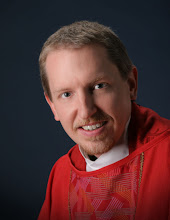
From Second Terrace